.jpg)




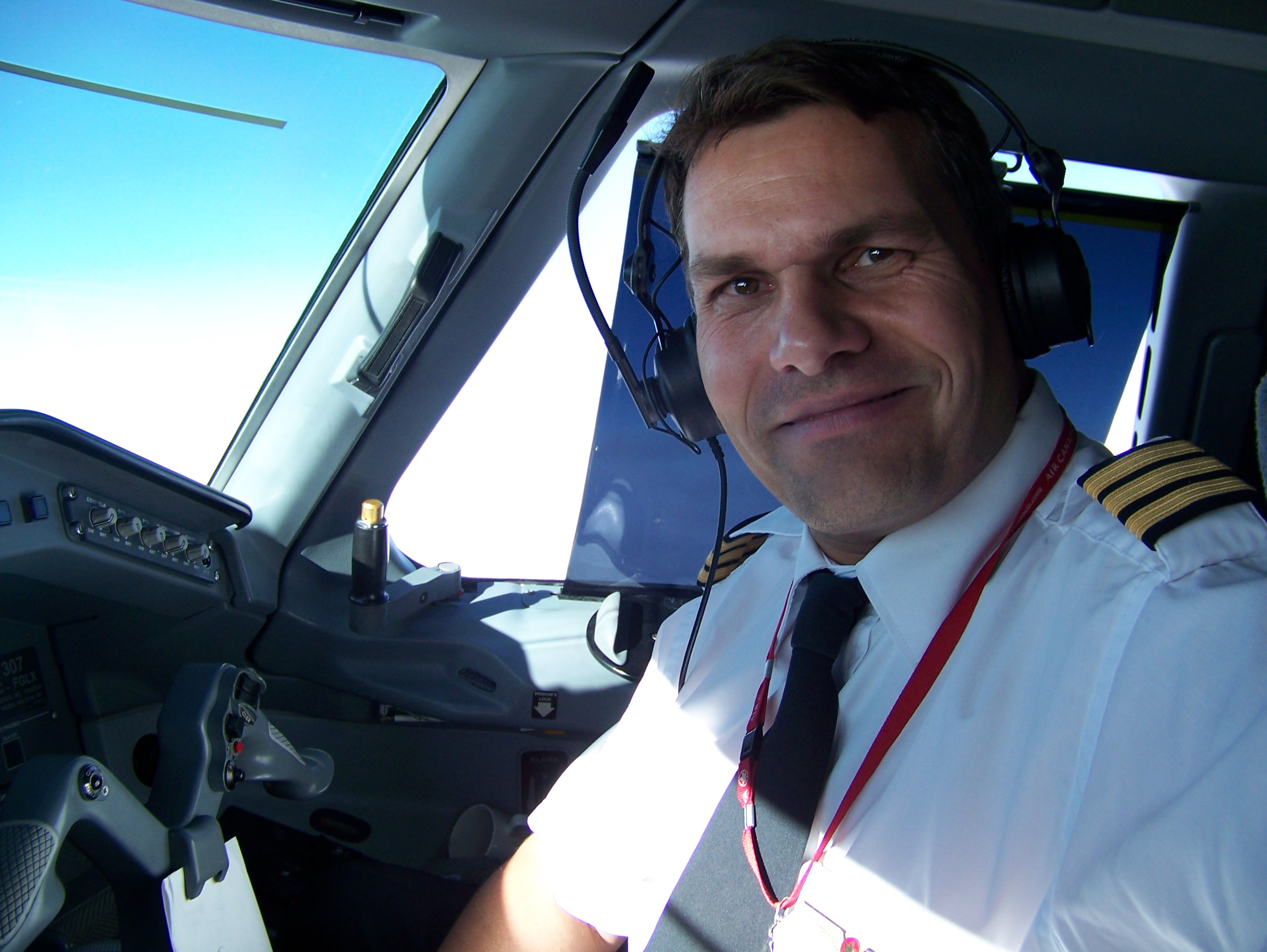
“Once you get past the first couple
of seconds of panic wondering whether
you can handle this, the training
“I was done in that first day, I was tired,
it was just one leg—now you laugh at it
because you’re so used to all of
“You have to think far ahead, and that
is the one thing that really changes—you
need more of a three-dimensional
“If you give up the first time anyone
says “no” to you, or “sorry, were not
looking for pilots right now”—then
“If you want a career move, you have
to try to find a company that will set
you up for the next step you are
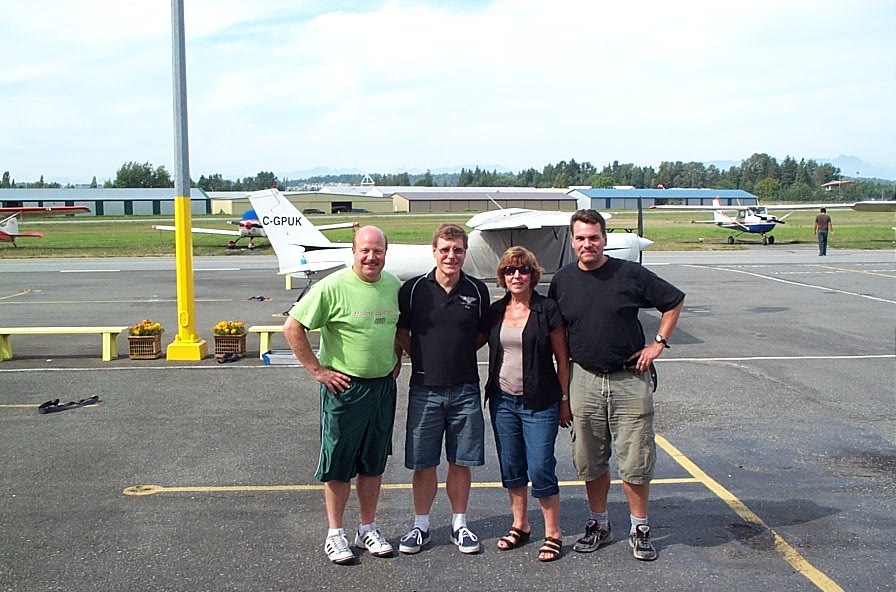
Nick Van Empel is a former Flight Instructor and one of the first Langley Flying School Graduates to fly with Air Canada. This following are exerpts from an interview with Dave Parry that occurred in the late summer, 2009.
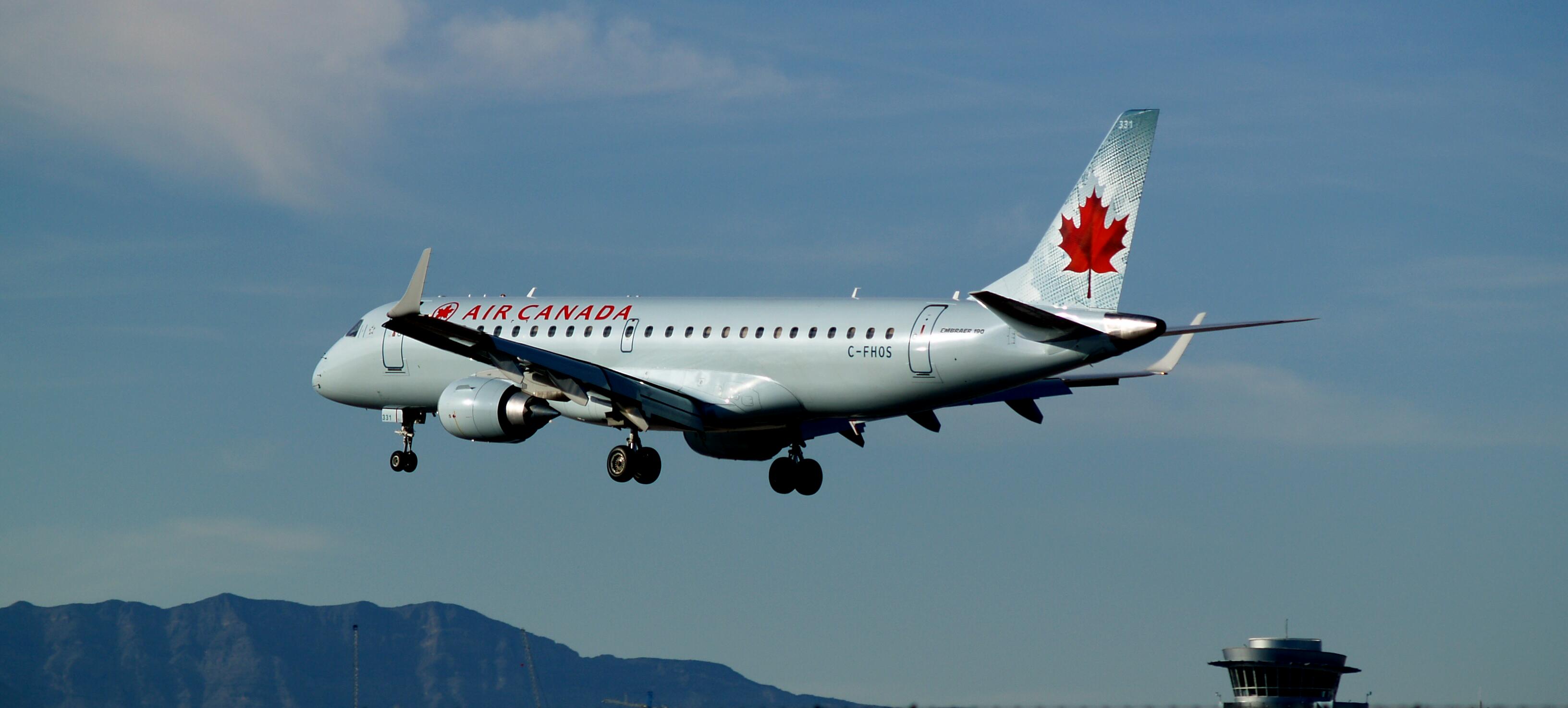
"Once you get past the first couple of seconds of panic wondering whether you can handle this, the training takes over . ."
The first time you took off in a Jet?
The first time taking off in a jet was in Toronto on a first leg, and it was with a Training Captain. I had done all the simulator training already, and that simulator training and the complete 3D simulation is fantastic. Once you get past the first couple of seconds of panic wondering whether you can handle this, the training takes over and it’s just like flying the sim—it’s so true. That sense of being pushed back in your seat with the power you get is a phenomenal feeling. That first takeoff, you feel like you got to where you wanted to go.
So you went right from the jet simulator into flight ops.
Yeah. You’re in there with a training a Training Captain, so they are kind of used to guys freezing up if they have to, but the training is so good you don’t. It’s really good.
Now I know that you have flown many different types, did the sentiments you experience on that first jet departure compare to other experiences like your first solo flight?
It was very exciting. You rank it up there with your first solo, or your first fam flight, because the instructor gives you control. The jet step is really immemorial.
Do you remember your first route on that flight.
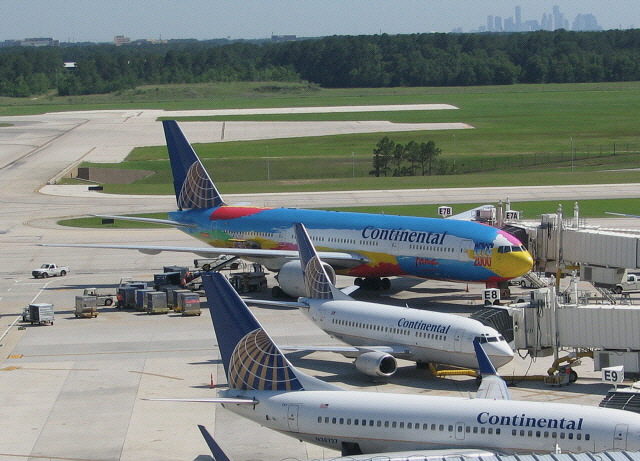
Yeah, I just know that that flight was a disaster! (laughs). My first flight was to Houston, Texas, and it’s got like 45,000 runways! (laughs).
My first flight was from Toronto to Houston. We had seven runway changes. The airport was closed due to a tornado.
Welcome to the major leagues!
We had two electric failures.
Really?
Yeah. Now, mind you, this is the start of the Embraer and this was a couple of years ago and the start of a new aircraft, and it had quite a few glitches, so you get false electrical problems. But you are trained for that and it goes very instinctive. The most shocking thing is that, at that level, everything goes very slowly. Everything is very businesslike. Any problems, it’s “checklist” whatever the fault is, “I have ATC.” So you switch the roll from the flying pilot now does all the radio work and the flying, and the non-flying person concentrates on the problem or fault at hand, and the checklist. Very straight forward.
"I was done in that first day, I was tired, it was just one leg—now you laugh at it because you’re so used to all of these things . ."
So this is your first flight and you actually had two events like this?
Yeah, basically, they were just faults that required system checks, but we also had seven runway changes and two separate holds. We anticipated the weather was coming and we had lots of fuel, so fuel wasn’t an issue. So we got put in a hold, airport was opening up—two aircraft got in. The airport closed-up again, and we got another hold. Two holds, seven runway changes, two faults, and we joked because on your final ride, pretty much all those things happen—not quite seven runway changes—and all we need now is a missed approach. Yeah, it was not an easy flight. At the end of the day it’s a tradition that your training captain takes you for a beer and that beer was very good ‘cause you’re just so done. I was done in that first day, I was tired, it was just one leg—now you laugh at it because you’re so used to all of these things.
So you over-nighted in Houston?
Yeah, and we flew back the next day and that’s pretty standard. It was a good awakening that one, but again, all of it was the exact same training you have been doing the previous two weeks in the simulator, day after day, building up to this flight.
You are obviously flying higher altitudes in jets, and you transitioned from the Dash 7 in Canada and Africa. In the Dash 7 your altitudes were probably limited to 25000’.
Yeap. In the Dash 7, twenty-five is the max.
I had got the occasional, a very occasional, Flight Level 200, 210 in the Dash 7, but that was rare. I never got that in Africa. Yeah, now you’re up to thirty-six and thirty-seven. It is also very memorable the first time you go to the max of the Embraer which is basically forty, and you have to be at the right weight. But, again, it is very much like what it is in the simulator—you get to do it and it’s amazing how realistic it is and how it trains you for the shock of that first jet flight.
Was the big change in starting work with Air Canada the routes in Eastern Canada.
No, I had seen the eastern region quite a bit, not that far south. Yeah, with the King Air too, we did a lot of the this stuff—Toronto was a basic pick-up point, Ottawa and Montreal—we went there quite a bit. That wasn’t so much—you know what, the more shocking and exciting things would be Los Angeles, and New York—that busy airspace—it’s a bit of a shocker the first couple times. So any initial line-endoc training, you start off with a couple of long legs, but you do a lot of New York. You have to do at least one or two flight into New York airspace and into Chicago airspace—very busy airspace—Atlanta as well, which we were doing at that time as well. That and short hops, because you’re super busy. In a jet, the worse case scenario is Toronto/New York/Toronto/Ottawa. Really, Ottawa/Montreal is the worse case scenario. Oh no, there’s worse (laughs)—let me retract that. Victoria/Vancouver—there are guys that don’t even lift the gear up on that one (laughs). Yeah, I’m glad that is not one of the first things you do.
"You have to think far ahead, and that is the one thing that really changes—you need more of a three-dimensional thought."
Things happen fast in a jet, then . .
That is the thing. You have to think far ahead, and that is the one thing that really changes—you need more of a three-dimensional thought. You’re saving fuel by staying up high, but you really have to plan a three-dimension thought as to what altitude I need to be where so I can make this approach comfortable and make the landing makeable. You don’t have to worry about this much when you are in a light twin. Even when you are in a turbo-prop machine—the Dash 7 has to be one of the fastest—they can really come down.
So what is the secret in planning this descent?
The three-in-one rule is pretty much the secret—which ever way you want to turn that around. You multiply your mile distance by three—you’re pretty good at estimating the height you really should be. You always add a little bit, so three miles out you should be at one thousand feet or so.
So you guys are applying these very basic rules.
Absolutely, when it comes it. You know what? Coming back to one of the most amazing things about jets is that when they switch a runway or an arrival on you the last second—“oh sorry, we can just squeak you in here”—and there is just no time to program everything in—turning everything off, it’s just like flying an airplane, and that is one of the things you have to learn, turning everything off and just flying the airplane. It’s amazing, and that’s fun. It’s very scary the first couple of times because you are just so used to everything being so automated. On the screen you can see where you are going to be at a certain amount of time, and height-wise and all that stuff. But sometimes there is just no time to program that in, and you have to go back to turning everything off—everything automatic—autopilot off, auto throttle off—and just fly the airplane.
Oh my gosh, that sounds great.
It is. And you know how you asked me before about my favourite airports, that why probably visual approaches into New York or Washington—capital, DCA—because you can turn everything off and just fly the plane, and that’s fun.
"If you give up the first time anyone says “no” to you, or “sorry, were not looking for pilots right now”—then this gig is not for you . ."
Talking about the young guys that are starting off in aviation, what advice can you give them in view of this new economic environment?
You can say there is quite a bit of luck involved in it, and it’s a little unfair in that regard, but when I look at the guys I’m sitting next to right now in Air Canada, there is a simple rule: If you have the drive, you will make it to your goals. You have to hang on to it. If you give up the first time anyone says “no” to you, or “sorry, were not looking for pilots right now”—then this gig is not for you. You have to have a serious drive, you really need to want it.
Also, it’s an cruel industry because the guys that really don’t enjoy their work get weeded out—the guys that just expect that the day after finishing their flying school training Air Canada will call them within two weeks and offer a job to sit in some jet somewhere. Yeah, you have to realize that every step is fun—you have to enjoy each and every step—but you have to create your own luck by being motivated, by really wanting to fly.
But also not being disappointed. I was at the point too where I was wondering if I were going to get the call from the bigger airlines, or was I going to be happy with just being a Captain on a Dash, and that’s your career. The only thing at that point you have to think about what you want lifestyle-wise, if you want to be, for example, overseas and not be home a lot. It’s not going to be given to you.
Another one that is very big is that it is a very small industry and you cannot burn bridges. You hear that a lot because everyone knows everyone. Like if I sit next to anyone at Air Canada right now, within a minute and a half, because we will ask ‘where have you worked’—‘oh yeah I know that guy, we had lunch last week. Everyone knows everybody and everyone knows your true colours.
When you are in an interview for Air Canada and you’re dropping off your logbooks and your references and all that stuff, you should be able to say that they can look up any job or any reference and you can hold your head up high. Where it happens to certain guys where they feel they have gotten too big or too important for their job they were doing, whether they were slinging bags or flying a smaller aircraft and they want to move on. Every step is very valuable and if you don’t appreciate that the last step got you to the next step, you’re in the wrong business. Because there are guys who will basically walk away from a flying job and felt they were above above the step they just made and they say the wrong thing, and that will come back to you. I’ve heard that quite a few times now, where they go through the interview process and they have a trail of three or four jobs per year. It’s a big red flag that guys are jumping jobs, and not sticking to wanting to move within a company.
"If you want a career move, you have to try to find a company that will set you up for the next step you are thinking about . ."
Advice? If you want a career move, you have to try to find a company that will set you up for the next step you are thinking about. Coming back to my step with Voyageur Air, I started off in the right seat of King Air, coming from Chief Pilot previously with an operator out in Vancouver—that might be viewed as a step down, but I accepted the job because then just didn’t have King Air—they also have a King Air where the upgrades to the left seat come reasonably quick, and there are also the possibilities of bigger airplanes after that—they have Dash 7s and Dash 8s, and ever RJs—Regional Jets now. So within one and the same company, you cannot just be there for a year, get your flying time and leave—you can be there four years, and work your way up several steps within the same company. If you can find a company like that—it’s a smart career move.
It’s a small industry, burn no bridges?
Yeah. Really important, cause you see it coming back—guys that went for an interview and don’t know why they got rejected. And now you find afterwards—oh, by the way, did anyone call for references to a place where you work? Would you hire that person again? “If they stepped through your door right now and the answer is ‘no’”—then red flags go off. It’s just one of those things—very important.
Picking your employers really well?
Try to—you might not always have a choice. And you don’t know either. Doing your homework on an employer—if you can you should. There are a few shady companies out there.
It’s not as bad as the olden days, though . .
Well, it’s got cleaned up a little bit, and the West Coast was pretty notorious for it. But that first job, you just don’t know any better, I think.
So, they should do their research well.
Yeah, if you can. If you can on the internet there are a few websites where there is a lot of talk about the industry and it’s good. There are a lot of people that, you know, if you ask the question “Hey, I’m looking at this and this company—anyone know anything . .” You got to sort of filter through the guys who left angrily and would say something bad regardless if it was good or not, and try to find out as best you can what the company would be like.
You’re referring to AvCanada?
Yeah, there are a few others, but AvCanada would be the place to ask a question.
One of the disappointments would be that you may not get your first job here in Vancouver. Vancouver is one of those places that everyone wants to be, so if you are looking for a new job you have to go up north, starting off on bags, or like I did, instructing, building up your hours that way. Hopefully, you can skip the bagging part.
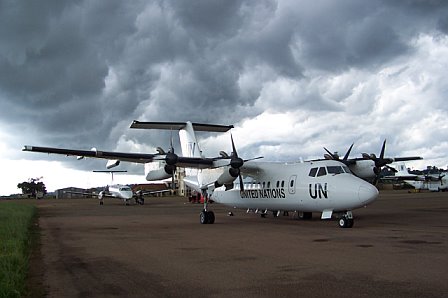
"Flying in Africa . . if you are unaware where you are at that point in time, you have got a very short career . ."
Looking back—you are now in the major leagues—you did some overseas flying, medevac—lots of variety—what was the most exciting flying that you have done?
While the flying in Africa, yeah—the rules and regulations are not as strict for the other aircraft flying around you. You are basically controlling yourself. Everyday, a controller in Africa might send you down to 8,000’ on the wrong side of a 14,000’ mountain range. So, if you are unaware where you are at that point in time, you have got a very short career. Really, I think controllers basically think you are visual all day long, and I think there is one myth I’d like to straighten out—people might think that Africa is blue sky and dessert, but central Africa is rainforest and thunderstorm. In Canada, we are so used to controller sending you in the right direction and really helping you out. The problem in Africa is the lack of training and understanding. The person in the tower thinks it is most important for aircraft to leave an airport—so he departs everything, and they have the right of way over an arrival. So, this is an example where flying in Africa is difficult. Departing aircraft have the right of way, and every runway has a terminal at one end of the runway. There are no taxiways, just a turn off to the terminal at the end of the runway. Hence, everybody lands in one direction and takeoffs in the opposite direction. So, when you are on your non-precision approach and lined up on the runway, and on short final, and you are calling short final, and they call for aircraft to depart into you, and you are unaware that this is a problem—once again, your flying career will be very short. So, you learn to be more than just a pilot flying from A to B—you have get the three dimensional picture for the aircraft around you, and situational awareness is obviously the key, understanding what is going on, listening in to all the traffic calls.
At the same airport they sent a 727 through us in the hold. We stacked in the hold, three of us, and Boeing 727 came in last, but of course it’s a big airplane and it’s very important, so he gave him the clearance through us! They were like—“Say what!?” I forget it now, but let’s say we were at 5000’ and he was at 7000’ and he was cleared to 3000’ in the hold—we were like “What the . .” Luckily he had a transponder and we could see him on TCAS.
But that will wake you up. But it comes back to basic training. If you are not paying attention in the circuit at Langley, it’s the same thing. If the tower closes and you’re on your own, and somebody comes in and wants to do a straight in, or on the wrong runway or with the grass, you have to understand that that is a traffic pattern.
The same thing is with the books—the whole understanding of density altitude. Well you learn about density altitude in Africa. The elevation of one airport was 6700’, and it’s 38°C—so your 50 passenger aircraft does not take 50 passengers because it can’t do it. If you lose an engine you’re not climbing—you either turn right into the mountains or left into unfriendly airspace—so the math comes back. An awakening in Africa was an experience with a four-engine transport. They stuffed this thing with cargo—whatever they can. They have a stack of lawn chairs, so if a local person wants to take this airplane, they give them cash and they get a plastic lawn chair for cheap, and they put it somewhere where you sit in this airplane—so this things were completely overloading. Clearly no weight and balance. That runway is on a plateau, and there is a little stream that goes into a lake below—and by the way, there are active volcanoes on either side. These guys would use up all the runway, and we would be standing there—“these guys are going to crash.” And then they sink off into this little valley and you don’t see them anymore. A couple of miles further up you would see them climbing up!
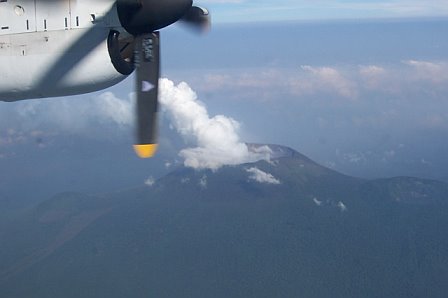
Africa was pretty interesting, then.
Yeah it was, but I wouldn’t recommend it for a family man—because it’s high risk and you’re away from home for a long time—but if you are young and adventurous, it is not a bad thing.
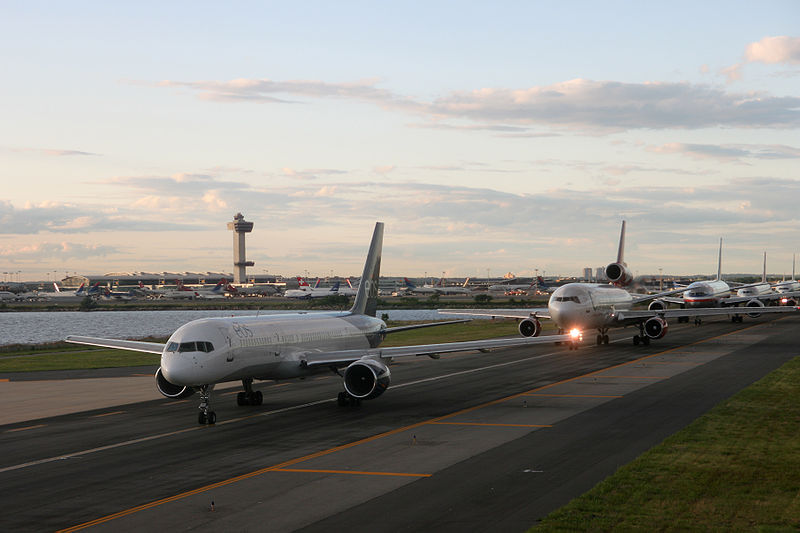
"Basically, when you are coming into New York, and you are still half an hour away, they still haven’t made up their mind which runway they are putting you on—they are figuring that out as it happens, and so are you . ."
What about the Big Apple—New York? What were your impressions about flying into New York?
Very busy airspace . .
The busiest you have ever been in?
Yeah. You are talking to a different controller every five minutes, easily.
You have to imagine that when you come into New York, they have you semi-planned to be—you know—number 75 to land by the time you start (your arrival), and if someone from a closer airport is delayed by five minutes, you become 74. But, if three come in faster—they fit aircraft in front of you, behind you. They basically fly your airplane at some point in time—they tell you your altitude and they tell you your speed, and they can change your mind continuously—so you speed up, and you slow down. And pretty specific—if you don’t keep your speed within 10 KTS, they will be harping on you. Yeah, so you can’t really plan for that, because it is different every time. You have to be ready. Basically, when you are coming into New York, and you are still half an hour away, they still haven’t made up their mind which runway they are putting you on—they are figuring that out as it happens, and so are you. So, basically, a couple of minutes before you are doing your approach, you are all set up for the approach you anticipate—you guess—when you come in from this side, for example, there are two or three different options they will do with you—but all they need is a slight wind change or something and all of sudden you’re on a different runway or you are coming in the other side—it’s tricky.
Is it all vectors?
Well, I wouldn’t say all vectors, but generally you are vectored in for an approach. Their favourite thing—New York is a prime example—their favourite question: “Air Canada, do you have the river in sight.” If your answer is yes, then you are cleared for a visual. They are not asking you if you are ready for a visual approach—you know, “Can you see the airport?” They don’t want any of that hesitation. And if you say “no” and the last three airplanes saw the river—they are going to question you . . . So you have to be on your toes.
As much fun as it is, the first couple of times, it’s scary. You have to turn everything off. You are so used to now flying the airplane with an auto pilot—setting your next altitude, not even setting your next heading because it automatically switches over and basically flies your flight plan—from that to turning everything off, is for the first couple of times its really scary, but after five or six times, though, it becomes fun—good old fashion flying skills—stuff you really like.
What’s it like going into New York when flight operations get jammed? Does that happen many times?
Yeah. Quite a few times. I was there, about a year ago, going into JFK, coming in from Calgary. A tropical storm had passed and basically everyone was holding. They were saying, “okay, New York is closed right now” and they were giving hold clearances with unrealistic “expect further” times—giving 45 minutes. Luckily we had lots of extra fuel. What happens at that point in time is that you use all your available resources—so we were on our way to New York and we talk to operations in Toronto to get all the information we can. When you are number 30 to go into New York, holding, ATC doesn’t keep you inform—they don’t baby you and tell you “okay, airports open.” So we talk to operations in Toronto and they watch and see airplanes coming in they’ll give us a heads up, they look at their radar screens and see how many airplanes are landing—they keep us informed and this is a major resource to you. If you don’t use this support, you wouldn’t be landing in New York that day—you would be landing at your alternate.
However, this was a prime example. Even though we had a solid hour of holding time as fuel—one thing you learn, but the way, in a jet, is completely different—it costs fuel to carry fuel. You know how when you fill up a Cherokee it doesn’t really matter—it a jet, you know, to take an extra 1000 Kilos costs you—on a longer flight you lose about 20% of that fuel—so it’s expensive to take extra fuel and its very carefully calculated. Anyway, so we came in, we were holding, and we had about an hours worth of fuel for the hold. We were about 40 minutes into the hold—about 20 minutes left—and then our company says they are landing. Left, right, and centre, guys that were in the hold are saying “we got to go to our alternate how . .”—next guy: “oh yeah, we got to go to our alternate now . .” I forget now, but let’s say our alternate going back to Toronto. We shortened it up—we shortened up our alternate . .
Like using Boston instead of Toronto, for example?
Yup, and all of sudden, now you have freed up fuel. So, even though we only had 20 minutes of hold time left, the change in alternate—coordinated through Toronto—made it work. About 70% of the airplanes that were holding in the hold with us had to go to their alternate, which is very inconvenient and expensive for the company—now you have an airplane full of people landing in the wrong place—landing fees, refuelling, duty day considerations—it gets very complicated. Because we did our homework, we shorten up our alternate, and we did the approach—and it actually ended coming up pretty quick because there were only so many guys that were left—well we started of number 35, we were actually the 10th airplane in—or something like that.
Nick, I’ve got one last quick question for you: what is the toughest airplane that you’ve ever had to land?
Metroliner. The Metro II is by far. It’s a tough airplane. It doesn’t land nice, I’d suggest—it’s a long thin airplane with a short wing and major speed. And if it goes well fast, it doesn’t go well slow. It’s the other way around with the Dash 7—it really loves slow, but it doesn’t go fast. It comes back to the whole wing design thing. The Metroliner is meant to go fast, but when you are on approach, when you’re slow, it’s a dog. That thing is faster than a Dash 8. Compared to a Metroliner, everything else is just a big 172.
Nick, thanks for all this.
It is my pleasure.